The Remake of the End of the Greatest RPG of All Time
If you read my first post or the introduction on the home page of the blog, you may recall that I mentioned wanting to talk from time to time about stuff besides production, like games I liked. Well, this is the first post of those! Hope you enjoy.
What is the Greatest RPG of All Time?
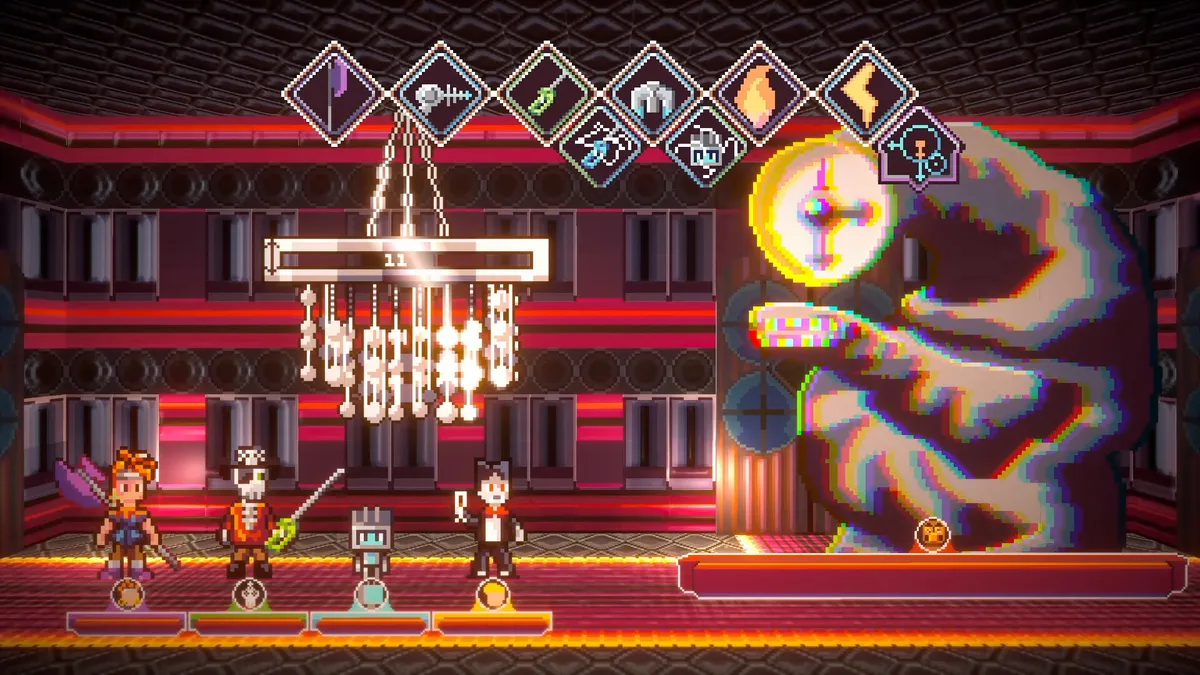
No, I’m not asking you to think about whether you think Final Fantasy, Baldur’s Gate or some other game is the best RPG of all time. I’m actually talking about one of the central questions of The Remake Of The End Of The Greatest RPG Of All Time, a meta-narrative puzzle game released on Steam earlier this year. (Yes, that is the name of the game.)
Even if it presents itself as a role-playing game, TRotEotGRoaT (I probably needed a better acronym for this… maybe TRotE?) has little to no actual gameplay you’d expect from an RPG such as character building or battles with deep strategy, and instead focuses solely on exploration and puzzle solving. The puzzles are built around a meta layer reminiscent of the puzzles in games such as TUNIC and Inscryption as TRotE includes a fictional “developer commentary” and “behind the scenes” documentary about the creation of the game.
I remember finding out about this game a couple of years ago through Stephen Totilo’s Game File newsletter, and it couldn’t have come at a better time — I was currently working on my thesis project at the NYU Game Center that involved researching games that talked about game development, and TRotE fit perfectly into that niche. I jumped on the chance to back the game once it opened a Kickstarter, and even if it ended up coming out way after I finished my thesis project, I’m super glad to have supported it.
While far from perfect, I really enjoyed my time with TRotE and was impressed by the guts it had to pull off some of the things it did. Even if not all of its 5-6 hour runtime lands, I found it interesting enough to want to write about some of my favorite elements in this blog!
The rest of the blog will spoil both minor and major parts of the game — if it sounds like something you’d play, definitely check it out on Steam.
The End
One of the clever elements of the conceit of this game is that it is not meant to be a remake of an entire RPG, and is instead is explicitly just the end of the game. While many games just drop the player into an unknown world with no context, it works especially well here as you start the game by “loading” a save of the game already in the final dungeon with “max level” characters. One of my favorite jokes in the game is that, upon loading this save for the first time, you are granted over 20 achievements at the same time. These achievements represent what was already unlocked on this save file, and are a cheeky way in which the game hints at the story before “the end” with achievements descriptions such as “Enter the portal and go to future” or “Defeated the Pirate King”.
Another way that TRotE plays delightfully with the idea of being at “the end” is by also giving you an inventory full of items, as one is likely to have by the end of an RPG. Most of the items are there as fluff which you can’t use though, and due to the quirky names and lack of a description it’s impossible to figure out the purpose of most of these… that is, until you encounter a NPC with a store, and the store finally has descriptions for each item.
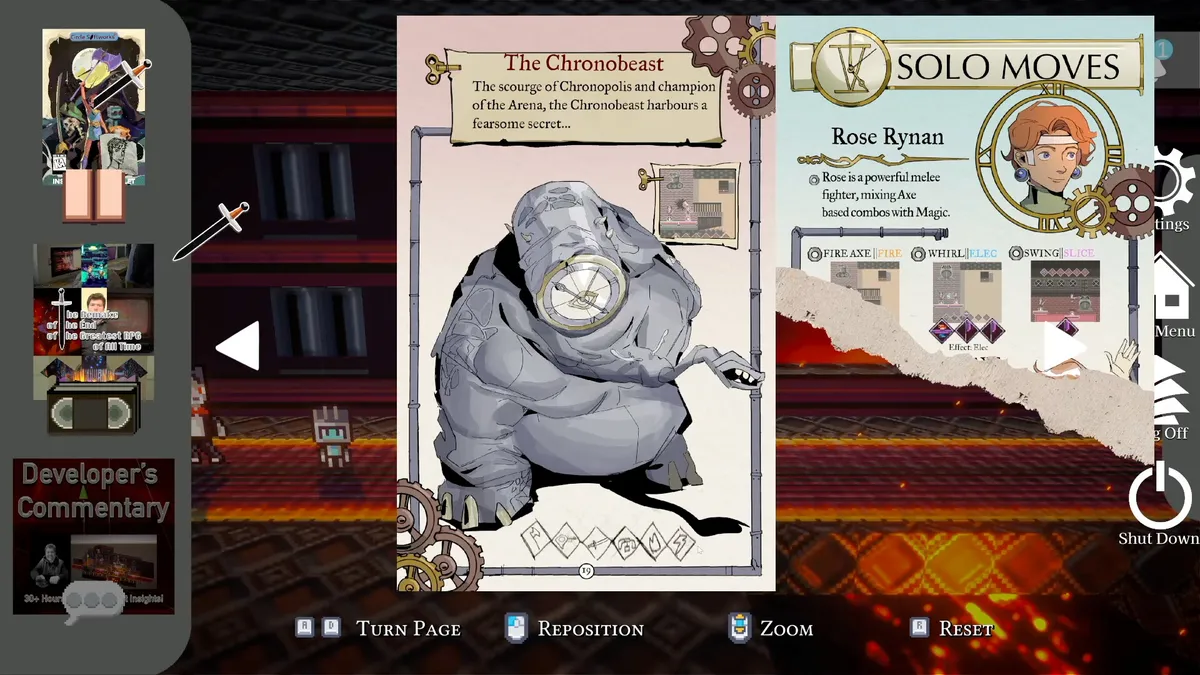
I mentioned earlier that TRotE takes after TUNIC, and there is no part where this is clearer than in the manual, which works basically the same as it does it TUNIC: the player can find different manual pages around the world, and these pages reveal knowledge that can be used to solve puzzles and access further parts of the game. While definitely a functional way to present mechanics and narrative, I do also wish the game had played more with clever ideas like the item descriptions in the store instead of relying mainly on the manual for mechanical discovery.
Beyond The Game
As I mentioned earlier on, one of the parts that intrigued me the most about TRotE was how it promised to talk about the fictional development of this fictional remake. While there are “developer commentary” audio logs spread across multiple levels, the meat of the “development” story, at least for the majority of the game, is presented through a documentary that you can gather clips of throughout the world.
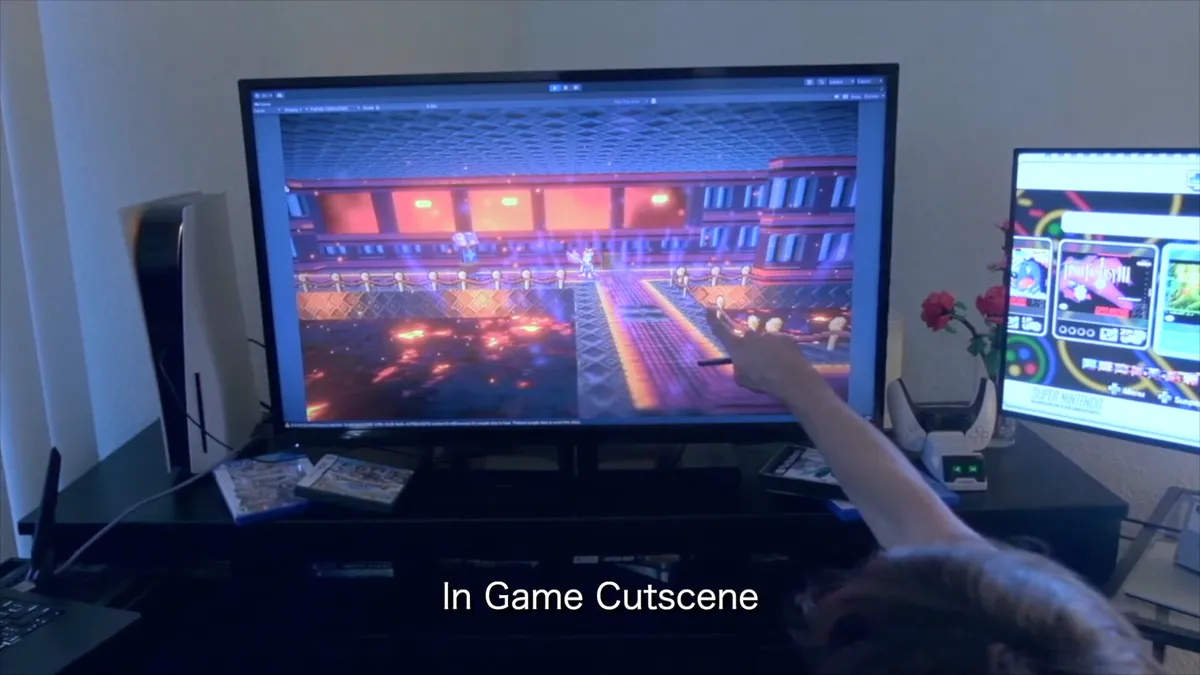
There are a couple of highly signposted but still clever puzzles solved by viewing the documentary clips, such as the one in the screenshot where the “developers”1 point out an area with a missing collider — this collider is still missing in the game, and by walking past it you are able to access a new “developer debug” area. Sadly, most puzzles related to the videos are much more simple than this example, but the videos still serve to give some more context to who these people are and the conflicts they faced during the development of this project, like the disagreements between the two of them over the direction of the project.
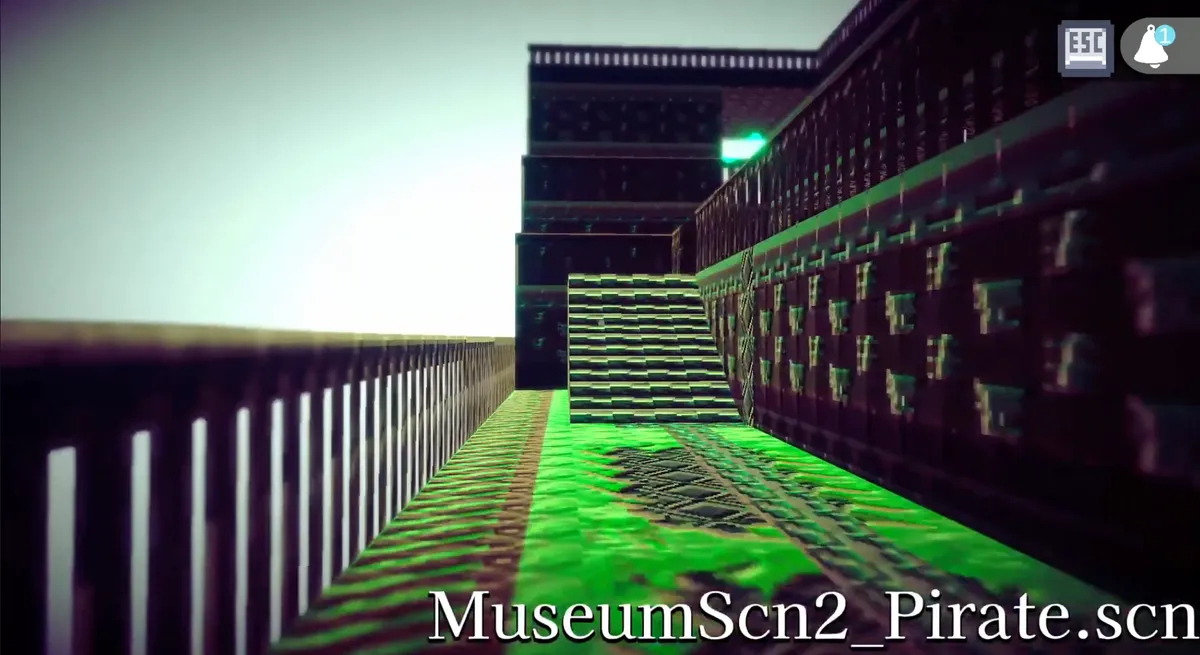
One of my favorite realizations during the game is when you discover that besides “shutting down the game” (which closes the game and returns you to your desktop), you have an option to “log off”. Logging off takes you to a kind of liminal space where you can hear the different documentary videos echo in the background, and are able to solve a different set of puzzles. As a reward for solving these puzzles, you are able to access “museum” scenes that allow you to explore some of the levels in the game from this same first person perspective instead of the frontal camera you see during the rest of the game, and it is in these areas where you’re given most explicitly hints on what exactly is wrong with the game underneath the surface.
The End Of The End
While I do think the narrative is one of the weaker parts of TRotE, one of the most interesting moments in the game was the ending. I do need to explain how we get there though, so bear with me with for a second!
As I hinted at earlier, there’s something wrong with the game: the documentary videos reveal that somehow the source repository of the game was leaked and an unknown actor is not only able to access but also edit the game. These edits are what you can find in the museum scenes, and putting these hints together eventual reveals the unknown actor to be “Noah”, a gaming influencer bent on calling out the hypocrisy of the developers trying to remake “the best RPG of all time”. Noah is an over-the-top satire of hate mobs in gaming which, while amusing at first, quickly becomes grating as the main antagonist for what remains of the story.
Despite Noah having access to the game’s source code (and seemingly being able to insert himself into the game in real time), the developers hint at an area of the game hidden from Noah where you can discover “the truth”. Some puzzle solving later, you are able to encounter this hidden area and discover that (a) “the Greatest RPG Of All Time” was in fact originally a mod of the same name created by the two main developers as kids, and (b) one of the developers was actually conscious of how the leak happened but did not block Noah’s access because he ultimately agreed with Noah’s criticisms of the game and hoped that it would get through to his development partner.
All this culminates with Noah “discovering” this secret area and deciding he must take this to where the developers can no longer ignore him: the real world.
The next section is an indulgent but fascinating sequence that treads the line between fantasy and reality where you get to see Noah log off from his computer, begin to drive and end up at… the Game Developers Conference 2026!?! Lucas, the real and fictional director of the game was part of a panel on “games about games” as part of GDC 2026, and Noah goes to this panel with the goal of facing Lucas after the talk.
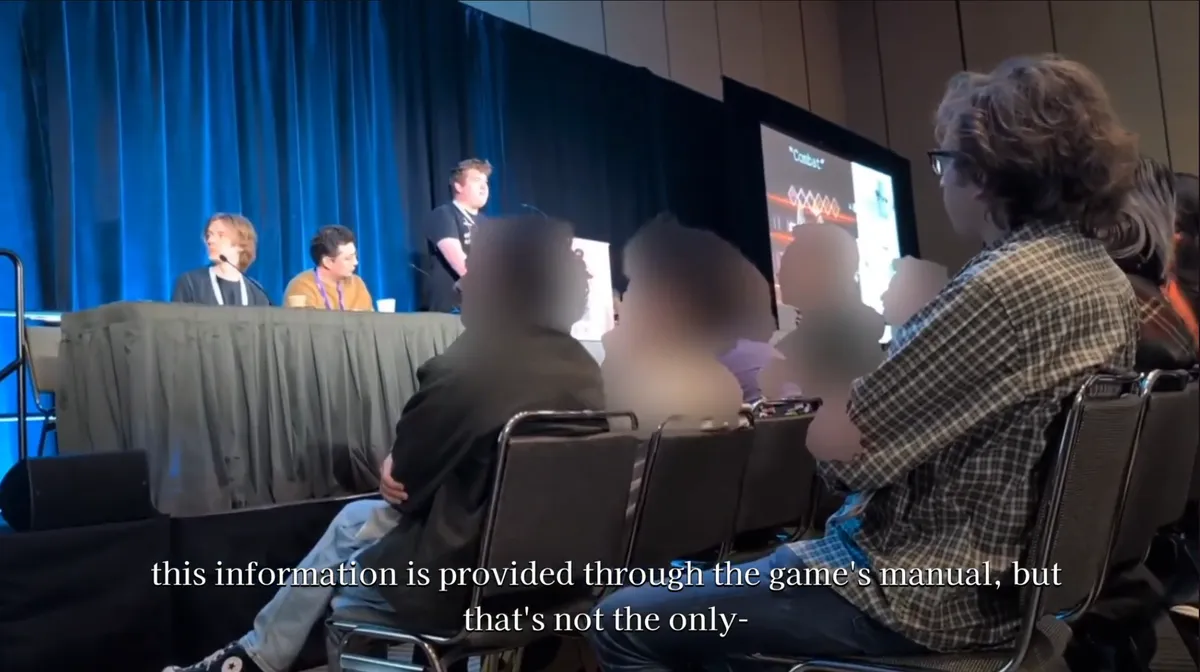
While it’s nothing new that developers get up to shenanigans at GDC, I admittedly was blown away by them actually using a real talk given by the real developer as part of the narrative climax of their game. The only shame is that the payoff doesn’t land, as all this culminates with Noah encountering Lucas after the panel who is with none other than the developer of the original RPG they’re remaking… who just goes “oh ok yeah the remake is fine”, totally disarming Noah… and that’s pretty much the end of the story.
There’s definitely a lot more to talk about in the game than what I wrote about here, and there’s a whole ARG puzzle going on that I only brushed over during my playthrough, but these are some of the elements that definitely stuck with me. Extremely excited to see more games from this developer in the future!
The developers that appear in these videos are actually the developers of the game, not actors! But aside from playing a fictional version of themselves, the team for the real game was larger than the two developers presented in the story.↩