The Anime Every Producer Should Watch
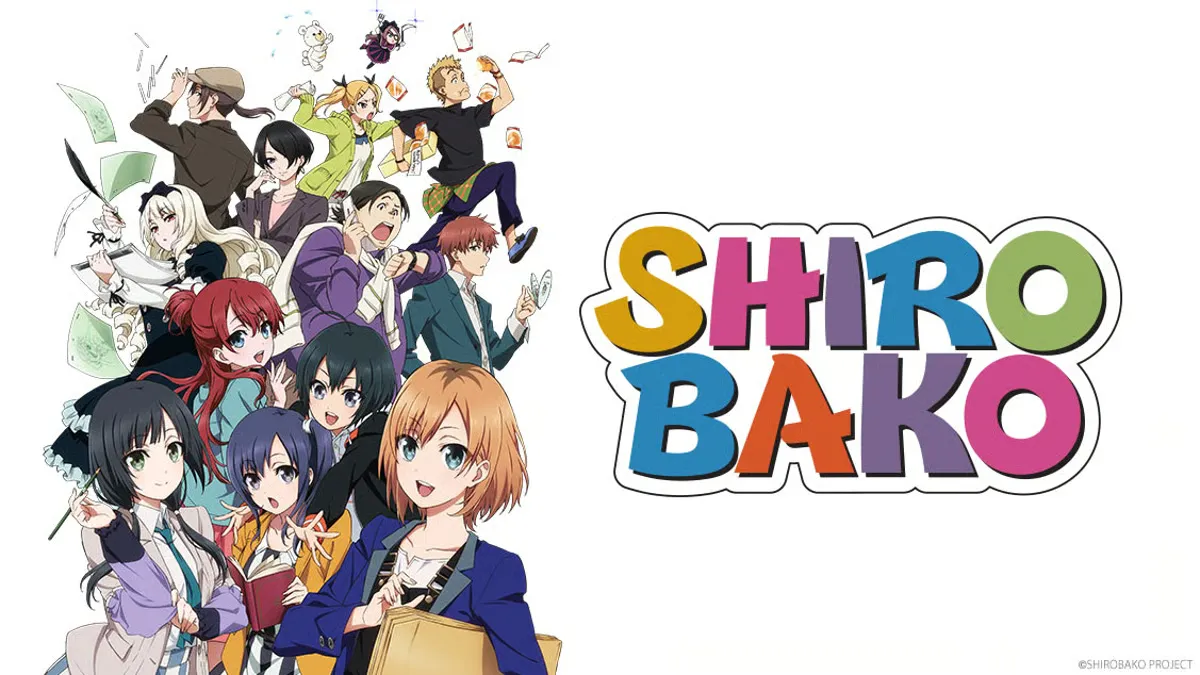
Last week, I wrote a post about why I picked game production over other game disciplines and talked briefly about Shirobako, an anime about making anime.
While it’s not the only anime about making anime out there (Keep Your Hands Off Eizouken! is another great one), the reason I keep on recommending it to people, especially if they’re in production, is because of how well Shirobako captures the complexities of working on interconnected, large scale creative projects. It perfectly captures how it's like to be in an environment where people are passionate about their work, while not being afraid to show the negatives of following your passion. And it does so while being a lot of fun!
Even if Shirobako is about making anime, it follows a variety of different perspectives and characters that make it resonate with anyone working in a creative industry. In particular, the main character is a production assistant called Aoi, and in her role as a producer she has a great view into all the different parts of anime production and how they interconnect.
In this post, I want to go deeper into a few examples of moments or elements that have stuck with me many years after having originally watched it, and talk about the parallels I can draw to my experience in game development and the industry at large.
I will be spoiling minor plot elements — if I’ve already said enough to inspire you to watch it, you definitely should before reading the rest!
The Price of Passion
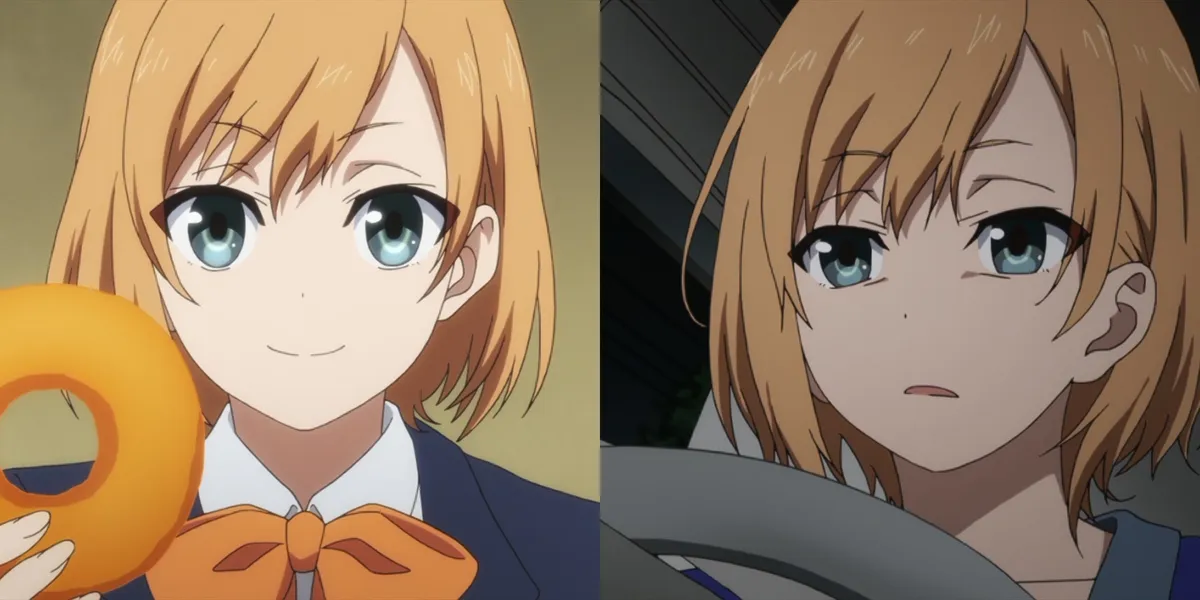
Right from the start, Shirobako doesn’t pull its punches.
After a heartwarming introduction showing the main cast making anime together as part of a high school club and promising each other they’d make their dream anime someday, we jump cut to a sleep deprived present day Aoi, overworked on the eve of the premier of the series she is now working professionally on.
A topic the series does not shy away from is the conditions that a lot of this creative work happens — there are multiple instances of characters who are under extreme pressure because of work, and face negative consequences such as anxiety attacks or even health issues.
While a full discussion of crunch is outside the scope of this blog post, the way overwork is presented in Shirobako is not unlike how crunch in game development is sometimes perceived as a necessary price to pay to hit the quality bar the team is aiming for while meeting their deadlines. Whether it be redoing the animation for an already complete scene to ensure it lands emotionally, or making their season finale as awesome as possible, the characters in the series accept the additional work willingly because they’re passionate about what they do.
While I may have gripes about how the presentation of crunch in the series generally tends positive, I both appreciate it shows the cost of working past your limits while also completely empathizing with why the characters do it.
I’m extremely proud of the work I’ve done for projects like Bubblegum Galaxy and many of the shorter projects I made for game design school, but I’d be lying if I said I never stayed late or pushed myself beyond healthy limits to hit the quality bar I set for myself. And in that regard, Shirobako captures this reality extremely well.
Bridging Disciplines
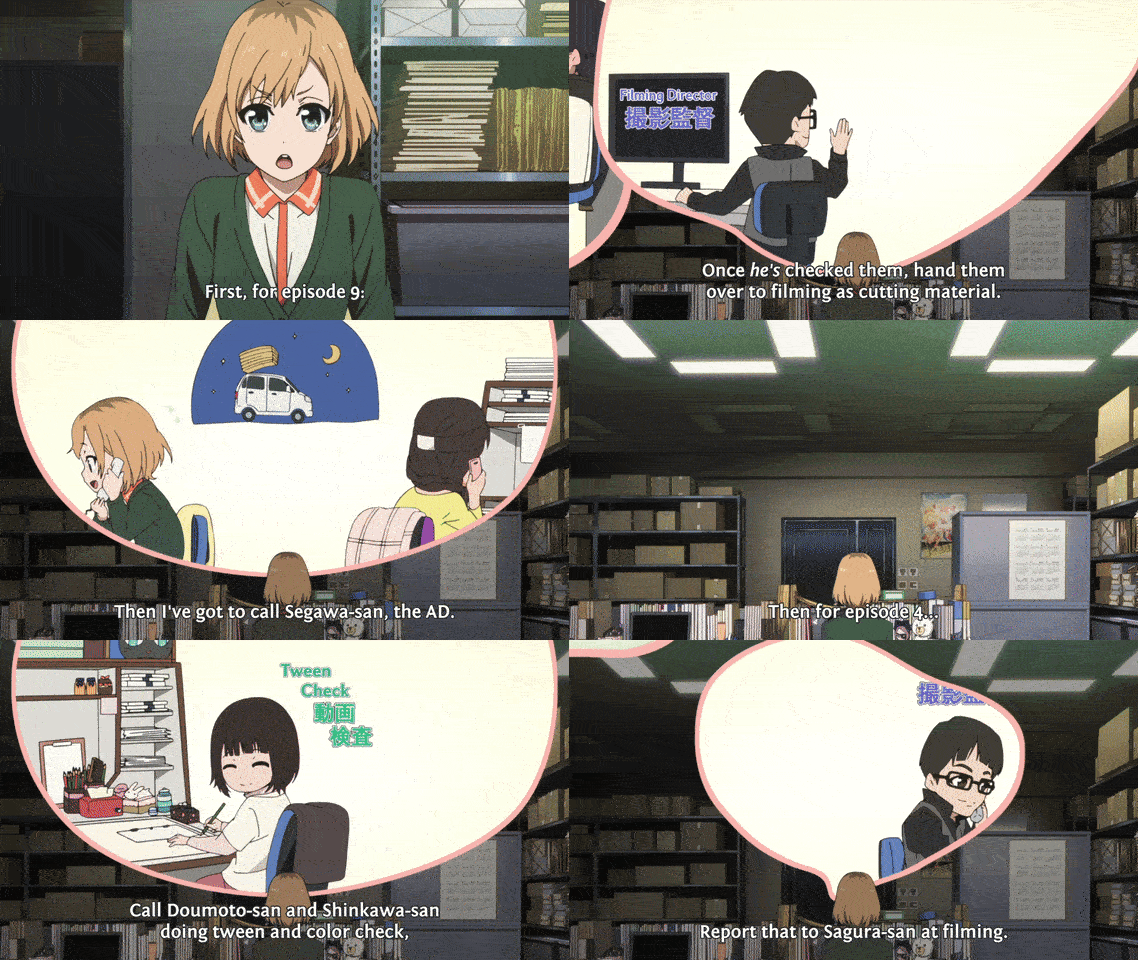
As I mentioned earlier the main character of Shirobako is a production assistant, a convenient plot device to showcase the different elements of anime production. But it also becomes a great way to showcase one of key responsibilities of a producer: helping enable proper communication and trust between disciplines.
One of the earlier story arcs is exactly about this idea. Due to another producer mishandling the situation, there was a miscommunication on whether a specific scene would be handled by the computer graphics artist or a traditional animator, eventually culminating in a fight between both characters and no clear owner of that scene. Aoi has to go in and pick up the pieces to help rebuild trust in this situation, with the two animators eventually bonding despite their different mediums of choice thanks to a shared love of mecha anime.
Shirobako does an excellent job of showcasing not only the technical problems but also the human problems that arise when collaborating inside and outside a studio, and many of these situations are an opportunity for production to shine. Without getting into too much detail, we get to see how they handle issues such as messy external partner studios, multiple stakeholders with differing opinions the product should take or even how to navigate the original author of a work not agreeing to certain decisions in the anime adaptation.
Breaking Into The Industry
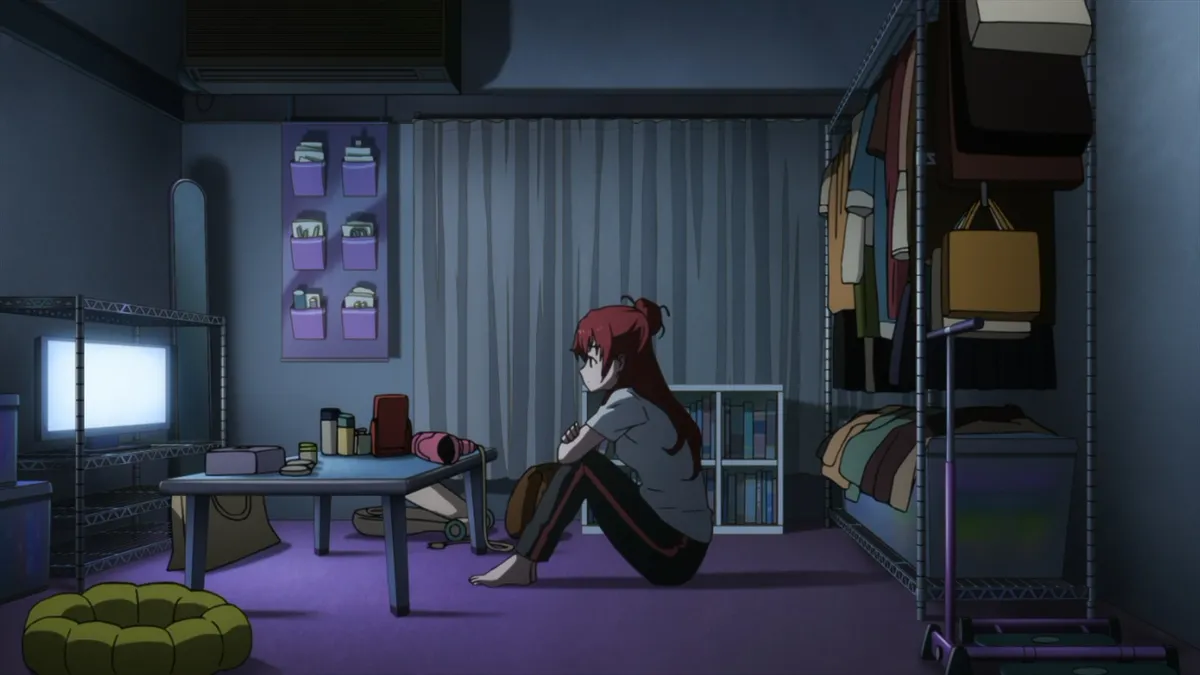
Another strong point of the series is how the main cast has a mix of people who are already working professionally in the industry and those who are still trying to break in. By far, the character who faces the biggest struggle is Shizuka, an aspiring voice actress who works as a waitress at a traditional Japanese bar while she auditions to multiple roles to little success.
This in particular hit especially close to home to the current state of the games industry, with newcomers struggling to break in to an industry that is at one of its lowest points. Similar to how Shizuka has to audition to roles with dozens if not a hundred other possible candidates, young developers are competing with thousands of other applicants whenever they apply to a job, and it’s easy to see how demoralizing this can be.
Although she shows her best face to her friends, it is hard on her self-esteem and we can see how her insecurity sometimes gets to her. But despite all this, she keeps on going and taking any chance she can get, even when it’s something unglamorous such as playing a costumed mascot in a play, as a step to get closer to her dreams.
Shirobako doesn’t shy away either from the fact that sometimes people are able to break in because they were at the right place at the right time.
Midori is a character who wants to write for anime and decides to study literature at college to pursue this goal. Spread thin with her own work, Aoi asks Midori for help researching specific details on Japanese diesel trains requested by the series director. With her school’s library at her disposal and a love for learning about obscure topics, Midori is able to handle the research without a hitch.
Impressed by the quality of the research, the team asks Aoi if Midori would be interested in joining the team in a part-time capacity. This eventually leads to the chance for Midori to collaborate directly with the writer of the team and learn from him, a lucky break that allows her to become immersed in anime production even if she isn't directly writing for the series.
This lucky break also becomes a moment for Shirobako to address misogyny in the workplace: other team members are quick to notice Midori’s luck and some dismiss it as a result of her being a “pretty girl”. It's a brief but well executed moment!
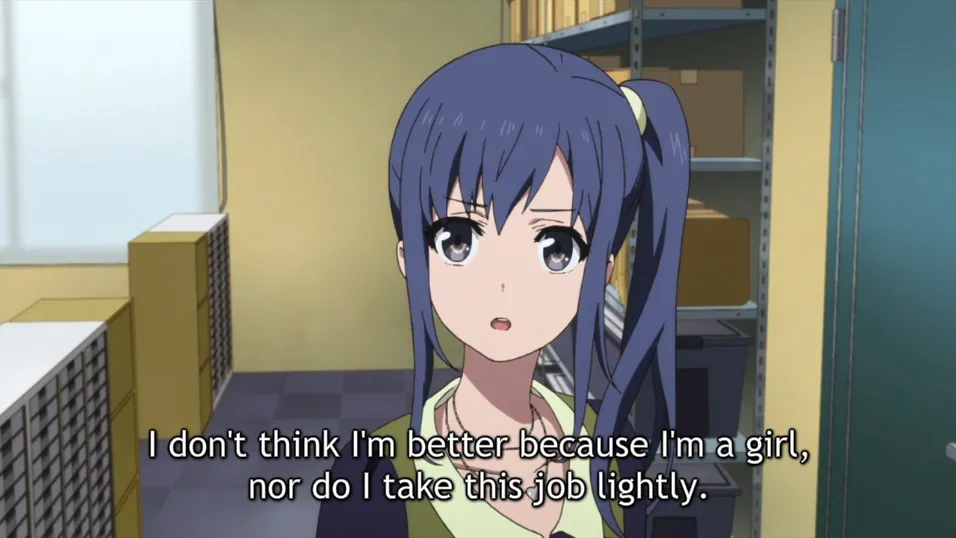
I can’t speak to how accurate Shirobako is to the real anime industry, but from my perspective in the games industry, it does a great job of capturing both the struggles and multiples ways of entering a creative industry.
Anime Is Made By People
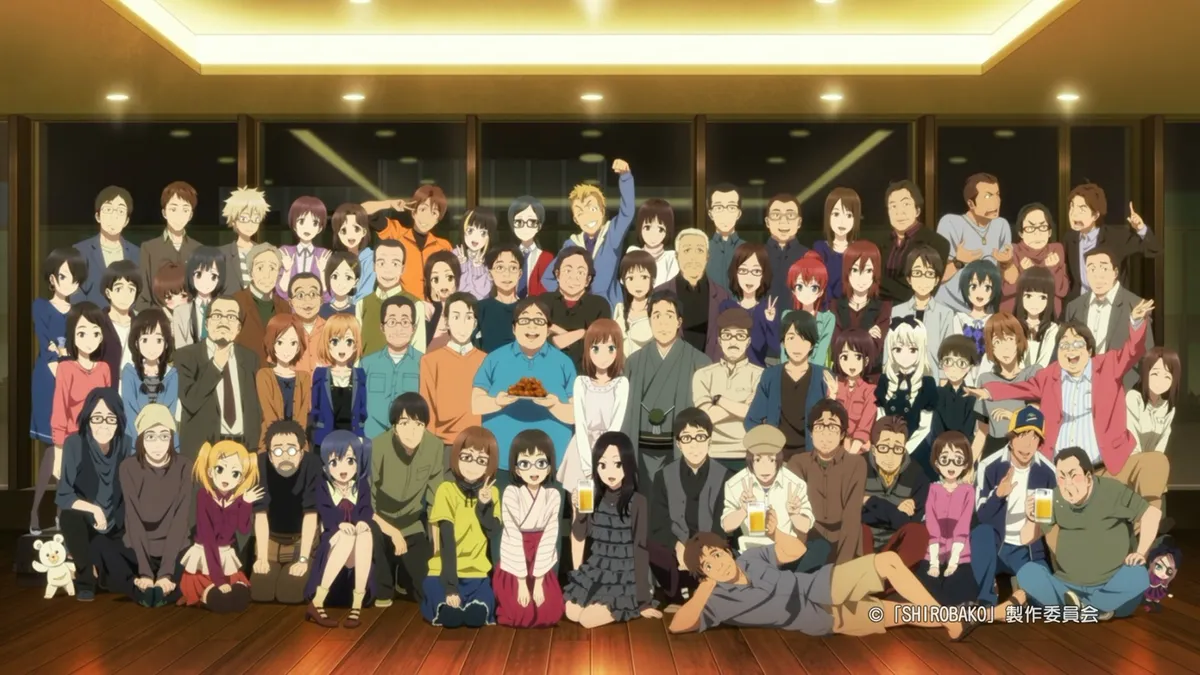
In my last post, I highlighted one of the reasons I love Shirobako is how it avoids the trap of over-glorifying any single auteur and instead is truly honest about the amount of people whose work is required and important to create any single piece of animation.
The best example of this is how almost all characters, even if they appear for just a moment, have a name and role. There's actually so many characters that the first three episodes of the series repeat the name cards for the characters to give you an opportunity to learn everyone's name. While they all have very different struggles, the anime does a great job of laying out how each individual contribution comes together to build the final product.
I could continue to gush all day about Shirobako, but at that point I'd just end up summarizing the entire series… So I hope this post has motivated you to give it a watch, and if you do, I'd love to hear what resonated with you!
{{ end }}