Make boring choices.
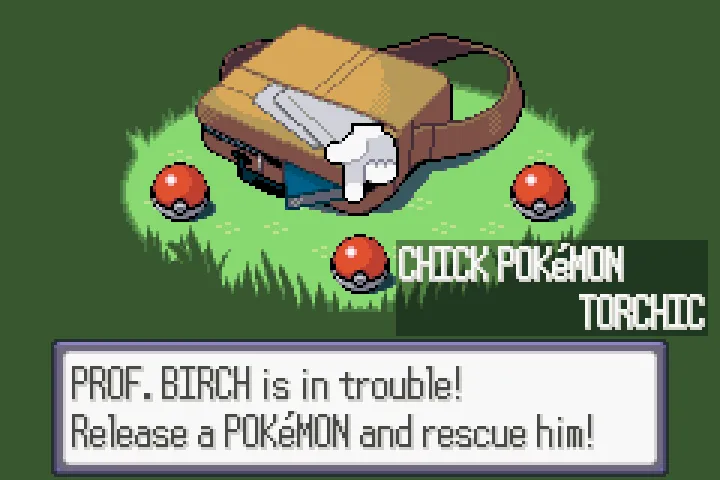
Pokemon Ruby/Sapphire (2002)
Roughly a couple of months ago, Smarto Club launched our second commercial game, Bubblegum Galaxy, on PC and consoles. As someone who was around from the inception of the project up to nearly the release, it was definitely a challenging project, but we’re super happy with the positive response.
If you take a moment to dig a bit further though, you’ll see that Smarto Club’s was founded in 2020 and our first game, a narrative adventure called Teacup, launched back in… late 2021. How did it take us until 2026 to release our second game as a studio?
To be fair, “indie dev takes many years to release a game” is a not a unique story, and we did release some smaller projects in-between, but after confidently having developed and released our first commercial game in roughly a year, we were hoping to take two years at most for our following big project. What happened then?
I think the main reason for this lengthy development cycle is that we made exciting choices.
What kind of choices? Well:
- We chose to develop a game in 3D, despite having no previous experience in 3D.
- We chose to develop a puzzle/building game, despite never having made a game in the genre.
- We wanted to make a genre mix that combined the puzzle/building elements with a narrative/exploration mode.
That last one in particular ended up making development feel like making two different games side by side! I always think about this Chris Zukowski post that came out when we had entered production that captures the folly in this kind of decision (“I have NEVER walked across a tightrope before, but I am going to try it while also juggling flaming knives and singing an Italian opera, a language I don’t speak”).
Despite being proud of Bubblegum Galaxy, I’d argue we could have probably made a better game in less time if we had made more “boring choices”:
- We could have developed a puzzle/building game, but kept it in 2D.
- We could have attempted to give the game a narrative twist, but minimized the complexity via presenting in a visual novel style format instead of creating a 3D space with it’s own character controller/camera and complex cutscenes.
- We could have developed a simple narrative game in 3D in the vein of Teacup to learn 3D instead of doing it at the same time were learning a new genre.
I think it’s important to clarify here though that making boring choices does not mean being unambitious or making a boring game.
It’s about leaning into what you already know, so you can focus on making something great instead of something good. It’s important to innovate from game to game, but innovation requires experimentation and time… and you never have enough time.
I’m a fan of Dan McKinley’s concept of innovation tokens (and well, this blog post’s title is a riff on his classic talk). While Dan is talking about the context of picking software libraries/frameworks for a tech startup, I feel like the general advice still applies — a team has limited amount of bandwidth to try new innovative technologies or ideas on a project, and has to pick carefully where they’ll spend these “tokens” and where they’ll go with a safer approach.
Even if their role can seem a bit more hands-off in the early days of pre-production when creative energy is high, I think it’s a key moment for producers to be pragmatic one in the room asking questions like:
- Have we ever done anything like this before?
- If not, is there anything we do know how to do that’s similar to this idea?
- What do we need to learn to pull this off? How long do we think we can spend learning and experimenting, instead of in development?
- Is there anything we know that we do not know yet? What can we do to figure this out sooner than later?
It might be “boring” to bring up these kinds of worries when people are trying to brainstorm awesome ideas, but keeping them in mind early during the development process will save you a lot of time and headaches down the line. So next time you’re faced with a decision, ask yourself and your team: what’s the most boring version of this choice that we could make?