Developing my “dream game”
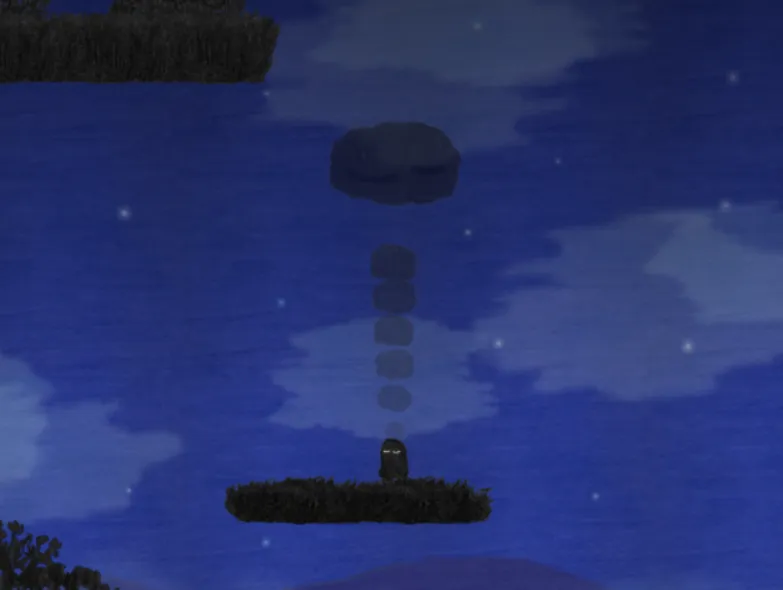
Dreams and Reality. Unlike the title may lead you to believe, this is not my dream game.
Did you ever have a dream game you wanted to make when you started your path in game development? I most definitely did — but I absolutely failed at making it.
I learned a lot from that experience, and I still find these lessons useful today. To tell this story though, I’ll have to go way back to the beginning…
My Start in Game Development
I got started in game development way back when I was a kid, tinkering with programs like Game Maker. Most of that tinkering did not lead anywhere until I learned about DS Game Maker, an application for making homebrew Nintendo DS games. While I never made anything too impressive in this engine, it was the first time I was actually releasing and sharing my small games with other people, and I even got an award in one of their small holiday-themed contests.
As it tends to happen though, I eventually grew out of DS Game Maker and wanted to learn how to make games with a “real” engine using code like a “real” developer. Thanks to a recommendation from a knowledgeable uncle, I ended up learning Unity and C#. As a way to motivate myself through these initial projects, I looked for contests I could participate in that had a relatively short deadline that wouldn’t allow me to spin out indefinitely:
- The first game I made was Ruins of Time, a puzzle platformer inspired by Braid built for the “SQUARE ENIX Latin America Game Contest 2012”. Although rough, the main mechanic was changing the “age” of objects (e.g. turning a seed into a tree).
- I afterwards participated in an “RPG Maker Indie Game Contest” (which strangely let you participate even if you did not use RPG Maker) with Sky’s Isles, a 2D action platformer where you explore a world of floating islands with a bow and a hot air balloon.
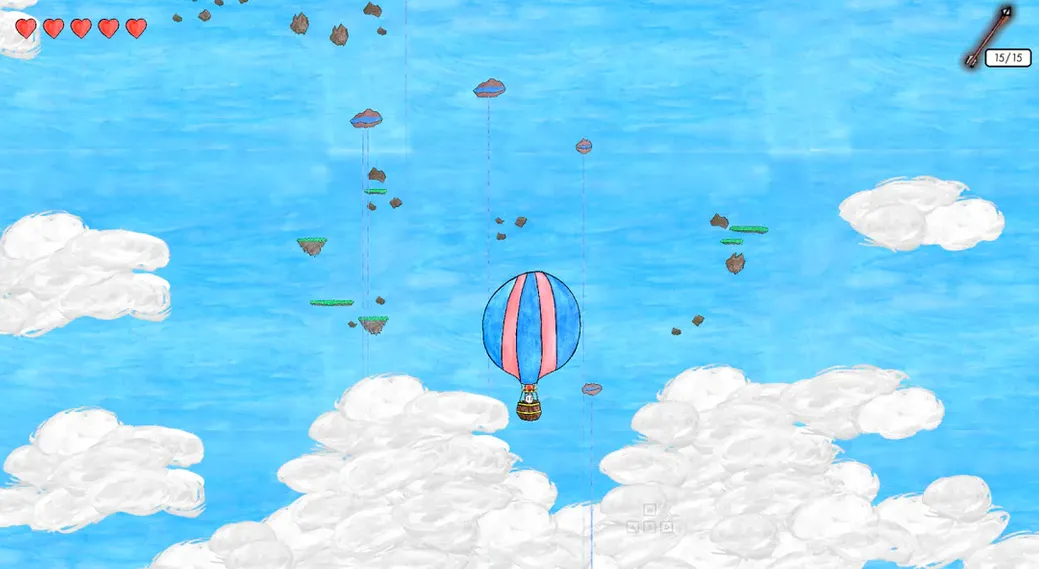
Sky's Isles
While none of these games were particularly outstanding or won any prizes, they gave me a solid base in Unity and the confidence I could go from concept to execution to release. You’d see many threads in game dev forums like /r/gamedev strongly urging beginners to start small or scope down on their ambitious ideas, but I was a beginner no longer — could I make something bigger?
The Dream Game
I’ve always been a fan of JRPGs with action elements like Kingdom Hearts or The World Ends With You, and Golden Sun was one of my favorite games ever. Even if I was young and naive, I wasn’t that naive and knew that a fully fledged RPG was way outside my scope as a solo developer, but was confident that I could build a game that had a cool combat system and revolved around a single hub area that could change as the story advanced to cut down on asset creation times. And that was how the concept for Life’s Impetus was born.
To be honest, I do think the idea for Life’s Impetus is still pretty cool to this day! I didn’t flesh out the narrative as much as I would have liked, but the player took on the role of the guardian of the “fountain of life”, and had to protect it from different undead monsters that wanted its power. The combat system had a mix of turn-based and real-time reactive elements (Paper Mario/Mario & Luigi was my inspiration at the time, but nowadays I could actually say it’s closer to Expedition 33) with mechanics inspired by Djinns in Golden Sun where you had to balance whether you were using a special resource to activate buffs/debuffs or special powers.
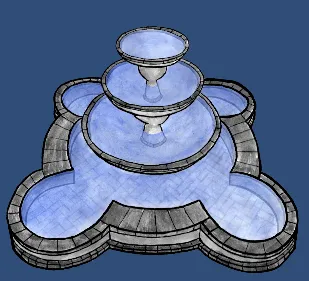
Art for the "fountain of life".
As it was meant to be a “big project”, I knew it was going to take many years and I was OK with that. But after a couple of years… I realized that this project wasn’t going anywhere. I actually had managed to make some pretty cool prototypes of the combat system, but the key issue was by far the fact that I wanted the game to have a a. hand drawn, traditionally animated watercolor art style with realistic characters and b. I wanted to do all the art by myself. Unwilling to compromise on that part of the vision and wanting to continue to work as a solo developer, I eventually decided it was time to shelve Life’s Impetus and work on something else.
Going Smaller
After cancelling Life’s Impetus, I decided it was time to make something smaller that I could hopefully finish in 4-6 months. I prototyped multiple ideas, but ultimately settled on making a top-down action game about climbing different floors in a tower. Admittedly, my main inspiration around that time was the Flash classic Tower of Heaven which was a short but extremely polished platformer with a memorable story and great soundtrack, and I wanted to aim for a similar scope (and also have a tower).
I didn’t want to fall into the same mistake as the last time though, so before I truly started development, I mapped out the key moments of the game, the mechanics and variety I should have to achieve my vision, and added time estimates to make each one of these tasks. And, considering I was working on this part-time, I added everything together… and realized that I would still need more than a year to make this game.
After getting excited for the concept, this was extremely frustrating — would I ever be able to make a game that was bigger and more polished than a game jam/contest game without taking years to develop it?
In my frustration, I decided I had to go incredibly small. As much as I liked Unity, it felt like a bit of an overkill for a small solo project and I wanted something that had a better web export, so I ended up switching to Construct after discovering it in a game jam. What I loved about Construct (besides a fantastic web export) was that it had “behaviors”, modular building blocks that made it super easy to create and tune basic character controllers such as platformer, top down, car, etc. which made it super easy to prototype without even having to enter the visual scripting part of the engine.
Based on all this, I set the following challenge for myself: could I make a prototype that represented the entirety of the game in only one day?
I was playing Animal Crossing: Wild World at the time and had gotten the picture for one of my favorite villagers, Chevre, which had the catchphrase “Dream a little dream”1 on it. Since I was making a small game after having failed at developing a bigger one, how about if I made a game that was literally about small dreams and how they’re more achievable than big dreams?
Using Construct’s platformer behavior, I made a prototype of a game where the player could “dream” to create platforms that allowed them to reach higher places — the twist was that big dreams were less stable and disappeared quickly compared to the small dreams, and ultimately the way to finish the level was by finding the path that allowed you to chain multiple small dreams. Even if it was a bit on the nose, I decided to call the game Dreams and Reality.
Since I only had a day to develop the entirety of the game, the game ended up being just one big level to traverse. And with that, I achieved my goal of building a prototype in a day! Finishing the game with art, audio and polish would be just a matter of months, right?
Well… long story short, it took a year to further develop the game and release it. (To be fair though, my initial estimations put it at 4 months of development which made it reasonable to pursue!)
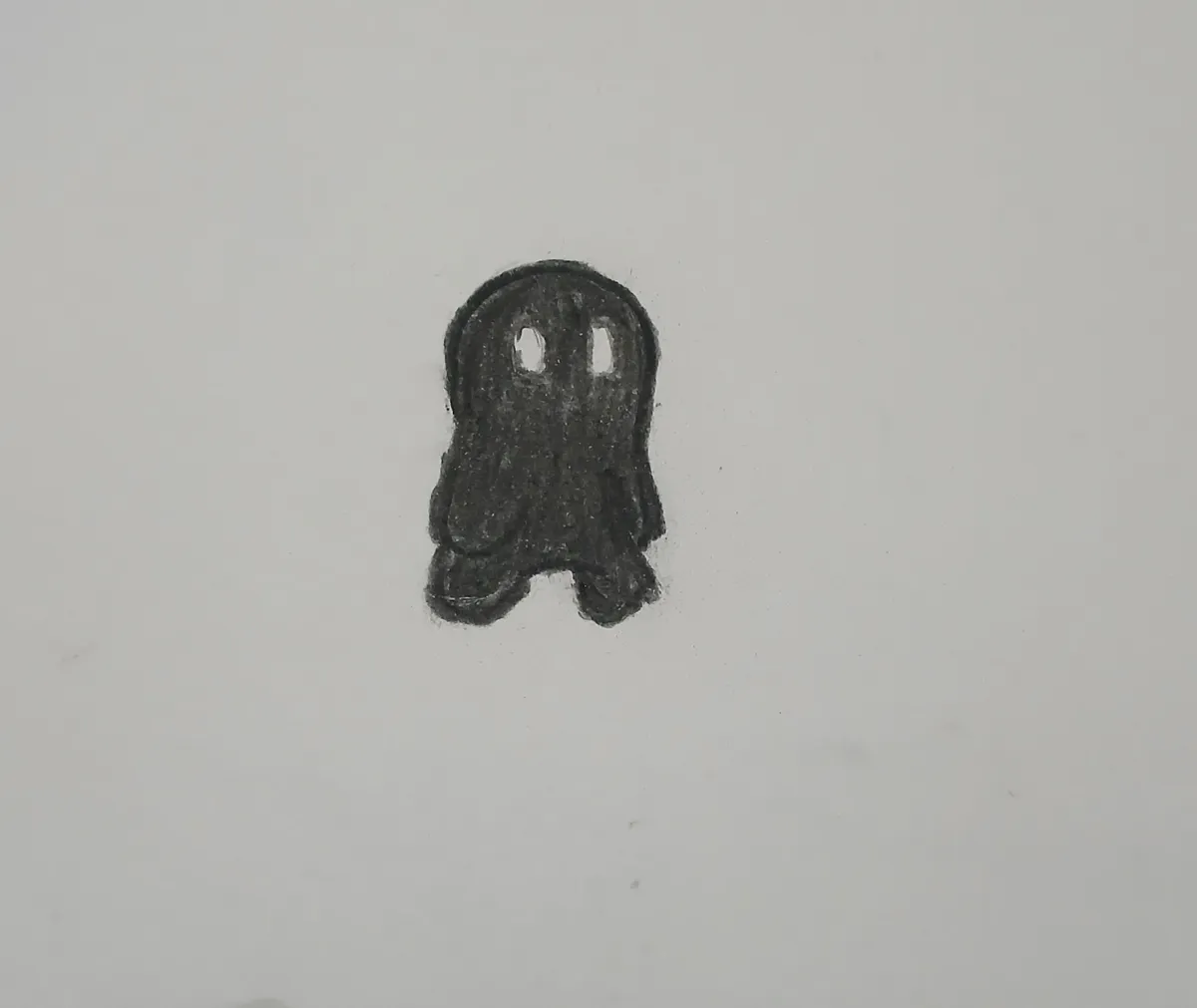
Player character in Dreams and Reality. Was really into drawing with charcoal at the time.
I still insisted on making hand drawn art which was time consuming even if the art style was much simpler than what I wanted to do on Life’s Impetus, and I felt like the game deserved proper music, which meant months of finding and working with the right composer willing to work on this small revenue share project (worth it though, he knocked it out of the park!) That said, I wasn’t too hard on myself anymore because that year spanned my last semester in high school and my first in college, which as you can guess meant I had a lot of other stuff to worry about.
And eventually, the game was ready for release! I published it on websites like Newgrounds, and while not a viral success, it was enjoyed by those who played it. It went on to get scouted by platforms like Armor Games and Coolmath Games which included a small payout (was super happy to be able to pay the composer thanks to this!) and also to this day Dreams and Reality is one the top rated games on the official Construct Arcade.
More than anything though, the biggest reward for me was the satisfaction of being able to follow through on a more ambitious and polished project from start to end. I have since then worked on and released much bigger and more complex games (which were also possible because I thankfully gave up on solo development and learned about the power of teamwork), but the lesson of taking small, steady steps towards bigger dreams is one that constantly guides my thinking to this day.
When researching for this piece I learned her catchphrase has since changed in the later games to “If you're gonna dream, dream big”… which is quite the reversal, to say the least.↩