Becoming a project juggler
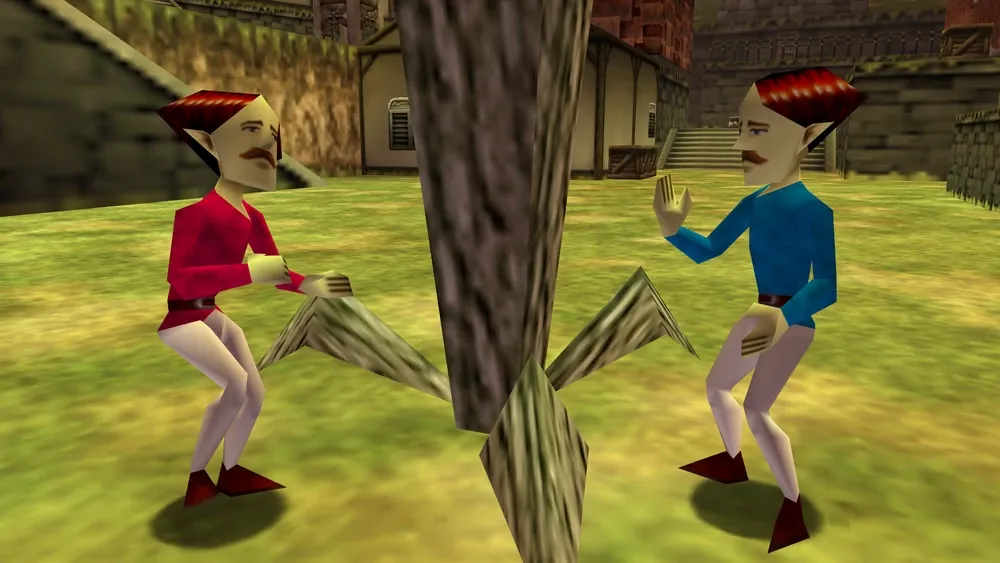
The Legend Of Zelda: Ocarina of Time
It'd be easier for most of us if we only had one project to focus on at a time, but that’s rarely how it plays out.
Maybe you’re the type of person who likes to participate in multiple different initiatives. Maybe you say yes more often than you should. Or maybe you just have too many responsibilities at a single job (which happens a lot to producers!). Either way, your first instinct when overwhelmed may be to deal with it by working harder. I have been guilty of this frequently myself! But I can say from experience that working harder does not work forever, and eventually leads to burn out.
I kept asking myself: how can I juggle all these projects by working smarter instead of harder?
Eventually, I realized there was no better inspiration than juggling itself. I changed the way I approached my work with techniques inspired by jugglers, and it not only made it easier to balance multiple projects but also made the quality of my work improve.
These techniques are what I want to share with you today, and to do so, I’ll teach you how to juggle - both figuratively and literally! You can break down learning to juggle into roughly 3 steps:
- Picking the right balls
- Practicing a good throw
- Adding more balls
If you’re familiar with my work, you may be reading this and feeling deja vu… that’d be correct!
This was the topic of a talk I did for GDC 2025. You can go ahead and watch the (free) recording of the talk over here, but felt like writing this post as an excuse for myself to review the ideas I had back then under a new lens and write a bit of behind the scenes trivia on how the talk came together.
Picking the right balls
You might think anything spherical will work for juggling, and while that’s technically correct, you’ll have a much better time learning if you pick the right equipment from the start.
For example, tennis balls may seem like good for juggling at first, but they’re bouncy and will frequently get away from you each time you drop them. On the other hand, juggling balls do not bounce and have a flexible shape that makes them more comfortable to grab.
In the context of this analogy, balls represent the projects you’re working on. Even with the best techniques in the world, you’ll have a bad time if you’re working on projects that aren’t a good fit for your skills and abilities. If you’re planning to juggle projects, it’s usually best to pick projects you’re confident that you’re able to do — if one project ends up being too big or overwhelming, that will bleed negatively into your other projects.
Another way to approach it is setting yourself up for success when joining a new project by making sure your responsibilities align with your capacity. For example, when I started developing Teacup with Smarto Club I was also juggling being a full time student and running our university’s game development club. Because I was the programmer, we intentionally made the decision to make the gameplay extremely simple and focus on narrative/art, as the team members responsible for that part of the game had more bandwidth.
One last point is to pick projects you’re passionate about! Juggling projects is tough, but it becomes easier if it’s an idea or cause you care about. I particularly like Derek Sivers’ way of phrasing it as “hell yeah or no”.
(All that said, I do acknowledge that being able to pick what you work on is a privilege that not everyone has! But I hope you still find the rest of the advice useful.)
Practicing a Good Throw
Before you can juggle multiple balls, you need to be able to properly pass a single ball from one hand to the other. It may seem too simple to be worth practicing, but developing proper form here will make it much easier to add more balls later. We can break down a good pass into three steps:
- You should aim the throw so that the ball reaches its highest point over an imaginary goal above your opposite shoulder.
- You must focus on the ball that’s in the air, not on your hands.
- You must grab the ball with a smooth scoop movement that prepares you for the next throw.
In our analogy, a good throw represents a good work session - you cannot aspire to juggle multiple projects until you’re able to be productive on a single project. And we can map the ideas behind a good throw to a good work session:
- You need to start a session with clear goals. Blocking out time to just “work on a project” can lead to unproductive time spent figuring out what to do instead of actually doing the work. If you need more structure, I’ve always found the SMART framework very useful!
- You need to be able to focus on the project during the session. The exact way to do this looks different for everyone - maybe you work best in short sprints using the Pomodoro method, or maybe it’s easier for you to focus for long stretches if you have a podcast in the background. Experiment and find what works best for you! I also recommend checking out the book Deep Work for inspiration.
- At the end of a session, you should set yourself up for success on the next one. What did you achieve during this session? What are your next steps? Make sure to write these down. The idea is to minimize the amount of time you have to spend next session remembering what you were doing.
Projects are rarely finished in a single sitting and usually require multiple sessions, which means you must be careful about how you plan your work sessions. The naive response is to say “I’ll just work on this until it’s done!”, but as Parkinson’s Law states, work will expand to fill the available time. You can actually be more productive by setting clear deadlines/time limits as it’ll help you focus on what matters most!
Of course, you may do all this and realize you’re unable to finish the work you propose for yourself in the time you’ve allocated for it. This might seem like a negative at first, but it’s actually a blessing in disguise — you’re realizing early in a project that it’s beyond your capacity, and you need to find a solution sooner rather than later, whether that be dedicating more time, delegating tasks or reducing the scope of the project.
I ran into this during the development of Teacup when I realized that programming the “simple” minigames actually wasn’t as simple or fast as I had hoped. I could have just grit my teeth and keep on going, but we were able to tap in a friend of mine from engineering school who was really interested in what we were doing and wanted the opportunity to help out with development.
Adding More Balls
Once you’re confident with your single ball pass, you can start practicing with two balls. Once you’ve become confident juggling two balls, you can start juggling three balls. And so forth…
The idea for juggling projects is similar: you should be confidently doing what’s already on your plate before you add anything to it, and you should add new projects slowly and gradually. I’ve mentioned that I worked on Teacup while I was still at college and running our local game development club, but I took my time to get there:
- I spent my first year of college mostly focused on my studies and making sure I got used to this new pace.
- Once I was confident in my ability to handle the courseload, I started participating in extracurricular activities like the game development club.
- Only after a couple of years in the game development club did I feel confident enough to tackle a large project like a commercial game.
Patience is important! Another couple of ideas I’ve found useful to keep in mind when adding new projects:
- Repetition is key — if you’re able to finish one kind of project, it’ll be easier for you to do similar kinds of projects in the future.
- The more projects you have, the more important it becomes to practice and protect your focus - having many projects means you will have multiple distractions coming at you from everywhere, but if you focus on your hands instead of the balls in the air, you’ll end up dropping all of them.
One More Thing…
And those are three steps you can use to get better at project juggling. But there is one more important lesson I got from juggling that is worth mentioning: don’t be afraid to drop!
Jugglers say that if you aren’t dropping regularly, that means you aren’t challenging yourself to try new things and learn. You may struggle at first trying to work on new projects, but being hard on yourself will help no one.
Learn what you can from the mistakes, pick up your balls and keep on juggling.
Behind the scenes
As promised at the start, I’m sharing some assorted behind the scenes fun facts on making this talk!
I prepared this talk while I was still a student juggling the graduate program at the NYU Game Center and developing Bubblegum Galaxy. As you may have noticed from the examples, I was mostly inspired by what I learned during my time as an undergraduate student working on Teacup, but preparing the session was also a useful exercise to evaluate if I was doing my best to balance graduate coursework and development work. And now more than a year later, I’m reviewing it as inspiration for my new role at 2K and volunteering at other organizations.
I applied this session for the Student track for a couple of reasons: it made sense because I was still a student and the talk was based on what I had learned juggling responsibilities as a student, but a very important reason was that I thought I had a higher chance of being accepted if I applied to this track…
If you watch the recording, you’ll see I do actually throw balls around, but never actually juggle. While I did a bit of juggling as a kid, I had totally forgotten how to do it and tried to re-learn it in time for that GDC. And I did actually manage to do it! But I was still dropping balls frequently and was kind of tight on time… so I decided to skip doing a three ball juggle during the presentation.
The GDC speaker guidelines advise you to plan for a decent amount of time to prepare your talk, and they were right! While it was not my first time presenting at the conference, it was my first time presenting at a large conference like GDC, and I wanted to make sure everything was perfect. I got my acceptance email at the end of November, and spent a couple of hours every weekend from then to March to tweak my speech, improve the slides and practice my delivery.
While I can’t for the life of me find the email now, I generally got a positive evaluation on the session! The room was full, but to be fair, most of the sessions on the student day of GDC were filled to the brim… The negative feedback I got was mostly along the lines of “this is also pretty basic/elemental stuff” which I would actually say is a positive for a talk for students?
And that it’s for now! It was a lot of work preparing a talk for GDC, but it was also a lot of fun. Part of me wants to do it again, but it also doesn’t feel as attractive anymore with the general decline of GDC… but who knows, time will tell.
{{ end }}